"Start by doing what is necessary, then what is possible, and suddenly you are doing the impossible." -Saint Francis of Assisi
2025/26 FAITH FORMATION PROGRAM
Pre-K and Up
Classes: Sundays from 9:45am to 11:00am
First Class Date: Sunday, September 28th
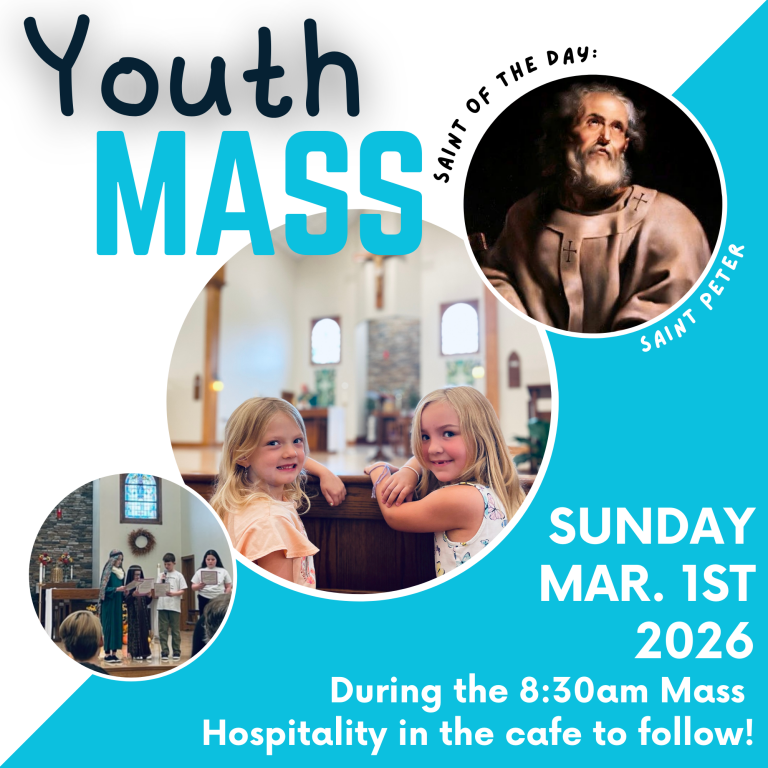
First Sunday of the Month Youth Masses: 8:30am Mass
SUBMIT ONLINE PAYMENT HERE: Faith Formation Online Payment Link
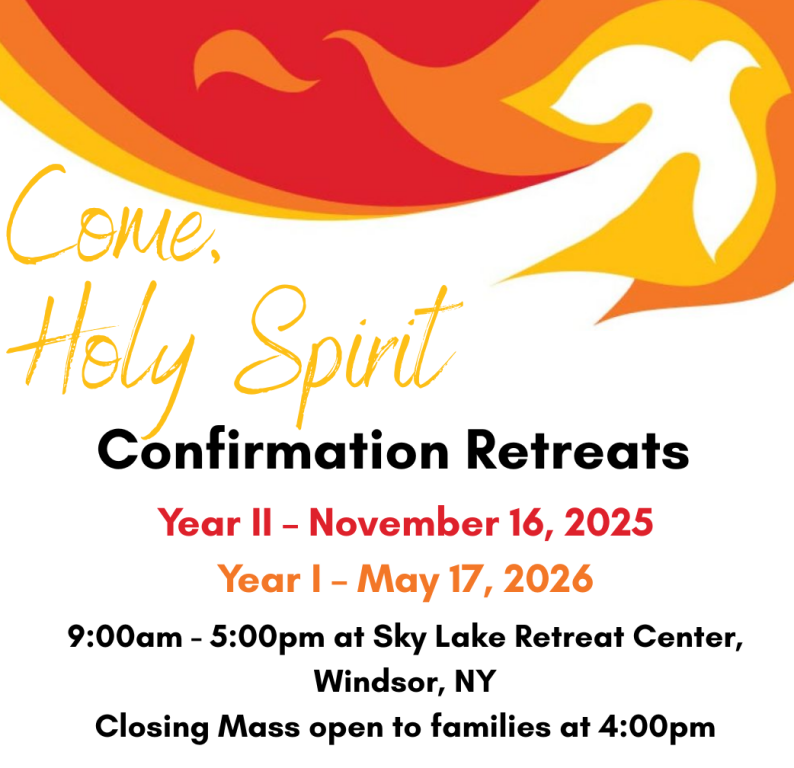
For information about First Reconciliation, First Communion, and Confirmation programs contact our office at (607) 748-8287.
For registration information and any questions, please contact Tori Reynolds at tori@olsvestal.org or (607) 748-8287.
UPCOMING CALENDAR DATES:
Sunday, March 1st: Youth Mass during the 8:30am Mass
Faith Formation Classes, 9:45am - 11:00am
XLT Teen Event: "Be the Barnabas" Grades 8-12, 5-8pm
Sunday, March 8th: Rite of Elect for Year II Students, 8:30am Mass
Faith Formation & OCIT Classes, 9:45am - 11:00am
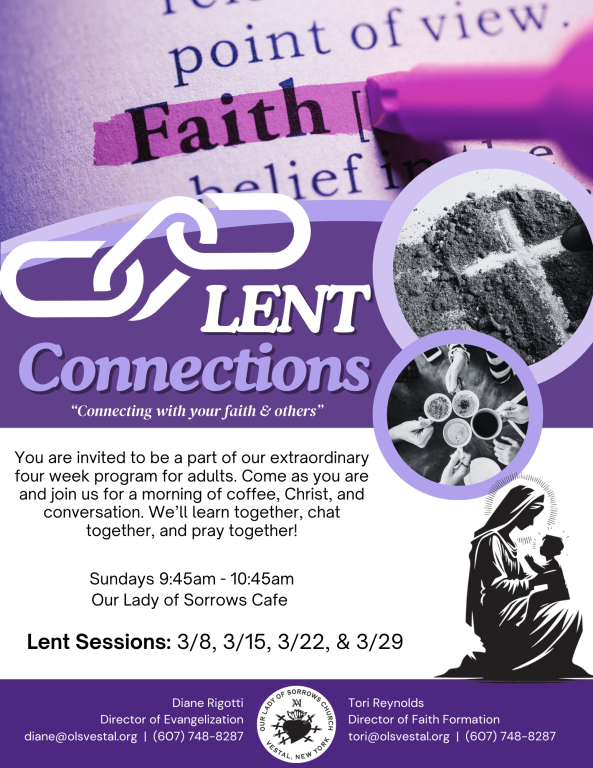
"Connections" Parent Session #1, 9:45am - 10:45am in the Cafe
Thursday, March 12th: First Sacraments Family Gathering #2, 6-8pm in the Cafe
Saturday, March 14th: OCIT Dinner with the Pastor, 5:15pm Mass - 7:30pm
Sunday, March 15th: Classes & "Connections" Parent Session #2, 9:45am - 10:45am in the Cafe
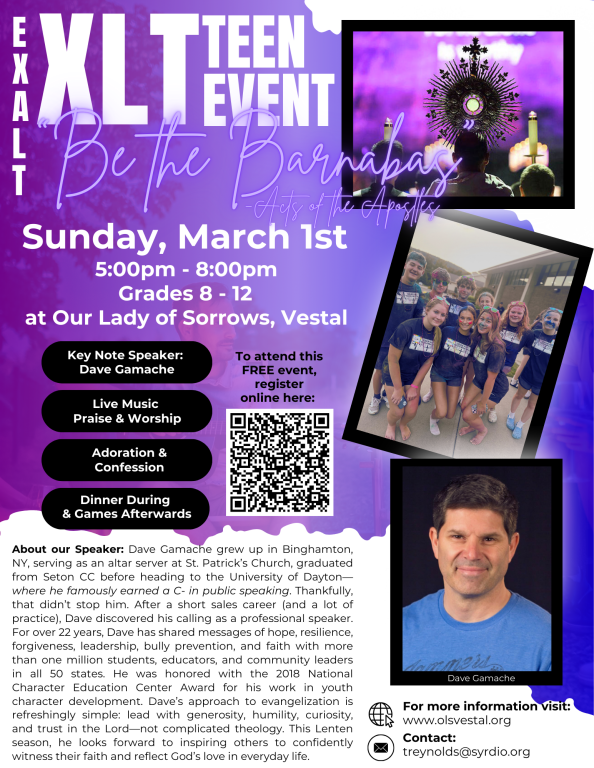
Register to Attend Here: XLT Event March 1, 2026


1858–1955
Patron Saint of racial justice and philanthropists
Canonized October 1, 2000 by Pope John Paul II
Five weeks after Catherine Marie Drexel’s birth on November 26, 1858, her mother died. After her father remarried, Catherine, her older sister, and younger half-sister were raised with all the privileges of their father’s wealth as an international banker—living in a mansion, receiving an excellent education from private tutors, and enjoying frequent travel.
But the girls’ parents were also devout Catholics who prayed daily before a small altar in their home and performed charitable works. Several times a week, the Drexel home was opened to the community for the distribution of food, clothing, and rent money to the poor.
At age fourteen, Catherine formulated a spiritual plan for her life. Six years later, Catherine was presented to Philadelphia high society, but her heart was not in the social whirl. She lost her forty-nine-year-old stepmother to cancer four years later. The next year, Catherine’s father took his girls to the Western United States where they saw firsthand the poverty of the Native American community on reservations. In 1885 their father died, leaving his fortune to his three girls. Francis’ will set up trust funds stipulating that each daughter would receive equal shares of the income produced by his $14 million estate—about $1,000 every day for each daughter, equivalent today to $35,000 a day from a $500 million estate.
Over the next two years, Catherine visited and made substantial donations to Indian reservations. During an 1887 visit to Rome, she had a private audience with Pope Leo XIII and begged him to send an order of missionaries to the Native Americans. The pope lovingly said to her, “But why not be a missionary yourself, my child?” Outside Saint Peter’s Basilica, Catherine wept, knowing what she must do.
In 1889, Catherine entered the novitiate of the Sisters of Mercy in Pittsburgh, taking the name Sister Katharine Marie. She made her final vows in 1891 and, with thirteen companions, founded the Blessed Sacrament Sisters for Indians and Colored People, becoming the order’s superior general.
Mother Katharine quickly went to work, using her inheritance to found a boarding school for Pueblo Indians in New Mexico and a school for Black girls in Virginia. Over the next sixty-four years, Mother Katharine and her sisters established forty-nine elementary schools, twelve high schools, Xavier University in New Orleans for Black students, and fifty-one convents.
In 1935, following a heart attack at the age of seventy-seven, Mother Katharine retreated to a contemplative life of prayer that lasted for the next twenty years. The annual earnings from Katharine’s trust fund financed her order’s ongoing charitable work. She lived her last years in prayer, poverty, simplicity, and charity, giving all she had and all she was to the poor. She was canonized in the year 2000, the second person born in the United States to be canonized.
Let us pray: Saint Katharine, you gave up earthly wealth so that you could receive the spiritual riches of a life of grace and better the lives of many. Please pray for me, that I will seek only a life of selfless service to all whom God gives me to love. Saint Katharine Drexel, pray for me. Jesus, I trust in You.
Saint Katharine Drexel, pray for us!